Let’s start with an interesting estimate: Half of all new vehicles sold in the US and Canada will be EVs by 2030. Meeting such demand will require an unprecedented number of batteries. Canada is uniquely situated to benefit greatly from this increase in demand. I will attempt to scratch the surface of what this market will bring in development, investment, and potential opportunities.
Background
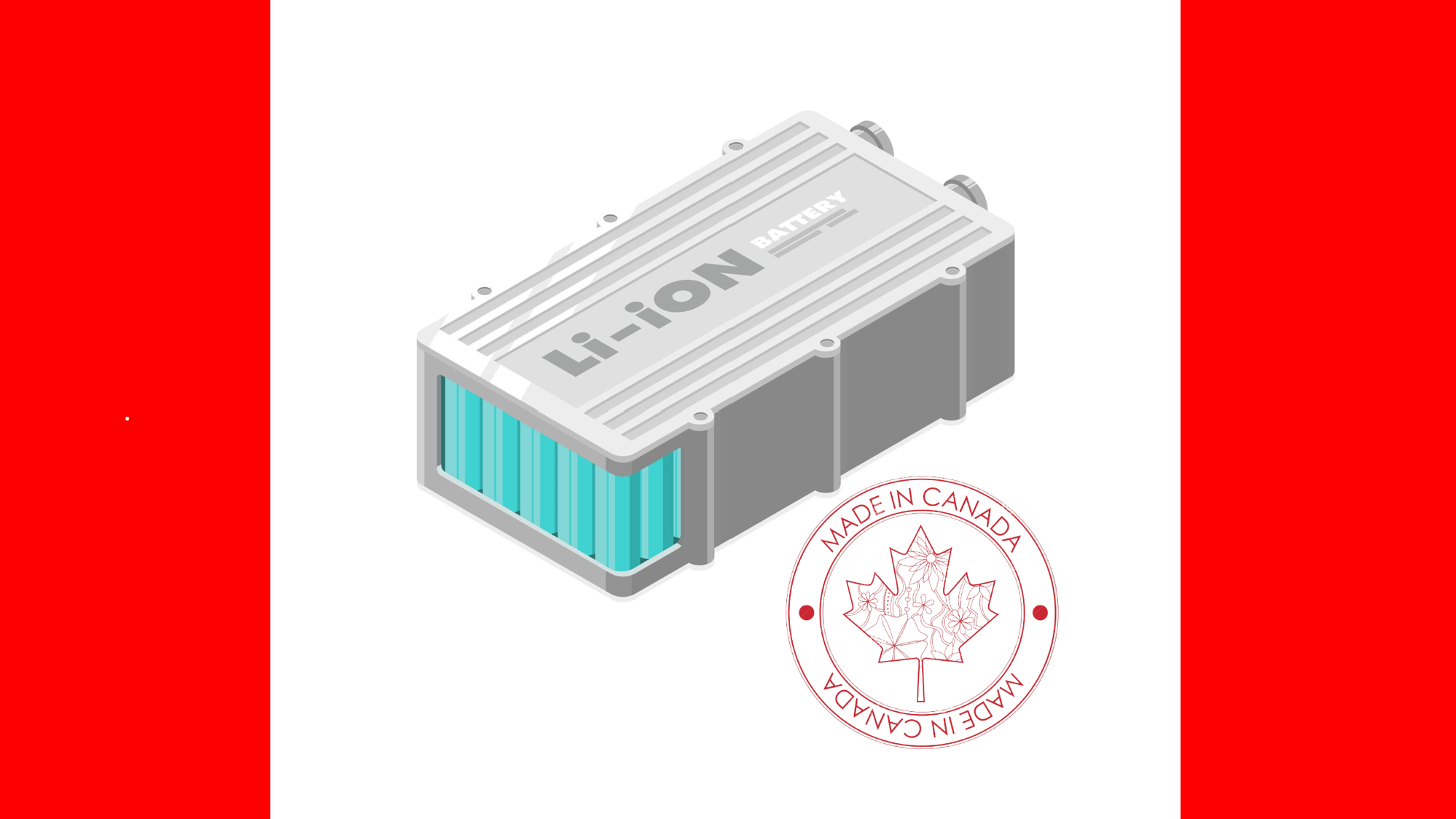
Most batteries require 4 key ingredients: lithium, cobalt, Nickel, and graphite. I will be using “battery” as a general umbrella term for the different batteries in production, but Lithium-Ion batteries are the most common in EV, storage and consumer appliance applications.

It all starts with mining the raw ingredients, followed by processing and preparing for cell production. After the cells have been produced, they require to be assembled into packs, which are then ready for deployment in electric vehicles. At the end of a battery’s life cycle, it goes into recycling, where some of the critical components are harvested and used in the production of future batteries.

Catalyst
The passage of the Inflation Reduction Act (IRA) has provided incentives for EV ownership with an emphasis on a diverse supply chain for vehicles and batteries. This provides tailwinds to the already growing demand in the Canada and the US.
Canada is in a unique position as it has access to all the raw material required to produce lithium-ion batteries as well as the production capability thus shifting the supply chain and providing a “re-shoring” alternative for the continent. BloombergNEF published a ranking of the global supply chain for lithium-ion battery supply. Canada has ranked second with great scores in access to raw material, ESG record, leadership in innovation, research, and IP creation. This is a massive advantage where Canada is capable of providing the entire supply chain, from batteries to ready to drive EVs.

Market Opportunity
The market opportunity lies in the battery supply for the domestic market, which is projected to grow to $17B by 2027, but also gain a considerable share of the available market south of the border and with established trade partners. Access to cheap, clean electricity, skilled labour, and ethical mining are all attractive factors to draw in investments.
On the demand side, China will continue to have the largest battery demand, but its global share will drop as the US starts meeting its pledged plans. The United States will experience the fastest battery demand increase among major markets. Access to the North American market means access to a projected $56B market for batteries with an additional $139B market for electric vehicles in 2027.

All Canadian Battery?
Deal announcements have been coming in left, right, and centre. Companies have realized the potential upside by establishing mining, processing, and production facilities in Canada to get access to the market. Notable deals include:
· Umicore to build an innovative EV battery plant in Loyalist, Ontario.
· LG Energy Solution and Stellantis have pledged to build a major EV manufacturing facility in Windsor, Ontario valued at $5B.
· GM has partnered with POSCO to invest $633M in a cathode plant, in Bécancour, Quebec.
· VW to open an EV battery plant in St.Thomas, Ontario.
· Magna International investing $470M to build a battery assembly plant in Brampton, Ontario.
Placing these developments on a map, along with existing and proposed mining projects for the key elements needed (Lithium, Cobalt, Nickel, Graphite), a battery development corridor starts to emerge. The supply chain can be visualised; mining in the north, processing and cell production in the south closer to the border.
There is an important opportunity for Canadian companies to participate and have their slice of the expanding pie. We already have some leading battery producers, such as Nano One Materials Corp. TSX: NANO and Ionomr Innovations Inc. who are taking the challenge head on. Li-Cycle is taking on the recycling of batteries to ensure the sustainability of the industry. It would be quite the achievement to see an all-Canadian battery produced, from raw elements to the finished product, all done by Canadian participants.

Entrepreneurial Opportunities
The Canadian battery and EV market is set on a massive growth path. While the production market is being capitalized on, secondary and ancillary market opportunities are still up for grabs. Mining, battery, and automotive production are all capital-intensive projects with high barriers to entry. This is not so for supporting services and products.
There are countless opportunities to provide products and services that are synergistic with the growth of the sector. Areas such as IIoT, data intelligence, supply chain management, robotics, transportation and trucking, battery recycling, charging infrastructure should all be looking for an entry or growth opportunity.
There’s already activity within VC firms for funding startups in the space. McRock Capital has a profile in IIoT investments. BDC venture arm has funds that tackle cleantech and industrial innovation. Aligned Climate Capital has funded Canadian charging infrastructure startup. Even Ontario Power Generation is supporting the space with PowerON Energy Solutions for the development of turnkey solutions for electric fleet deployment/management. Sustainable Development Technology Canada – Technologies du Développement Durable Canada is well known for supporting many cleantech, data intelligence, and battery companies.
Opportunities also exist in research and development to maintain our advantage in innovation and intellectual property. University of Calgary and Dalhousie University have excellent programs in the battery space. The University of British Columbia and University of Alberta are world leaders in mining. Topics like battery efficiency, reduction in the environmental impact of the supply chain, and future battery technologies will all be critical in the continued success of the sector. Solid state batteries have the potential to disrupt the space and there’s already some emerging R&D for the commercialization of the technology with Glabat based in London, Ontario.
An all-electric future is coming, and Canada has much to contribute. A combination of macro market forces, incentive structures, and demand for an emission free solution are producing a generational opportunity that Canada must capitalize on. Entrepreneurship, job creation, continuous innovation, and strategic advantage are all to play for.