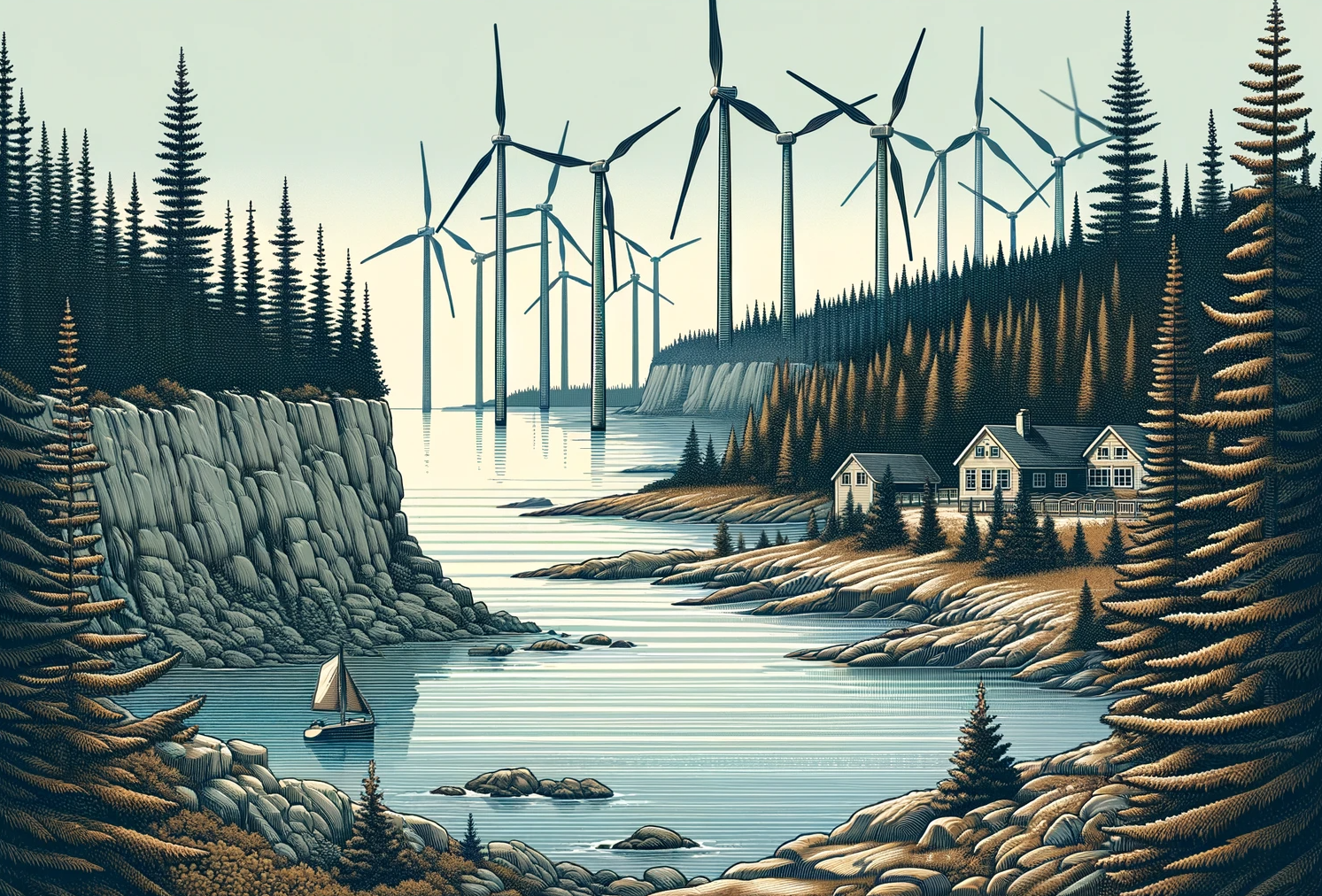
The shores between Britain, Norway, Denmark, and Germany are seeing a boom in activity for offshore wind development, dubbing it as Europe’s new powerhouse. Europe has always been ahead in utilizing wind power, but this development is larger in magnitude and impact. The technical advancements are opening opportunities to capture wind power that is both stronger and more consistent, providing a reliable source of power. In the 90s, the first offshore wind farm installed in Denmark had a capacity of 5 megawatts (MW), now a single turbine can generate 14 MW. Today, the cumulative capacity of the region is 20 gigawatts (GW) with plans to reach 150GW by 2050!
These efforts will start a migration of industries towards the region, offering energy that is both cheaper and carbon neutral. Already a British project provides power at a cost less than a sixth of the wholesale power prices (1).
In Canada, no offshore wind projects have been deployed to date (3). What can we learn from the North Sea? The success of the North Sea offshore farms depends on 4 factors (simplified):
1) Availability of wind speed that is 10m/s on average.
2) A soft seabed that makes it easier to anchor turbines.
3) The ability to go further offshore to reduce noise impact on the mainland.
4) Energy transmission technology.
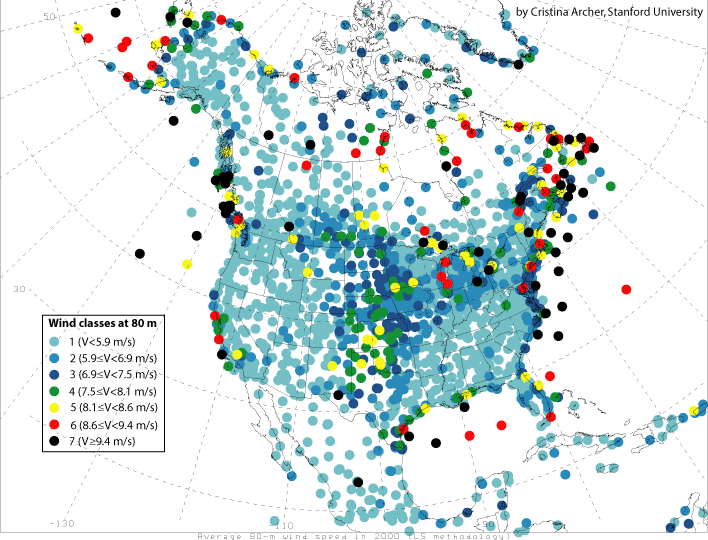
Three of the four factors are geographical. Looking at wind power for Canada’s east and west coast, we see that there are suitable regions that meet the wind speed requirement. As for at the ocean floor requirements, geotechnical data for the east and west coasts have been compiled in the Expedition Database, available online and is available for usage (2).
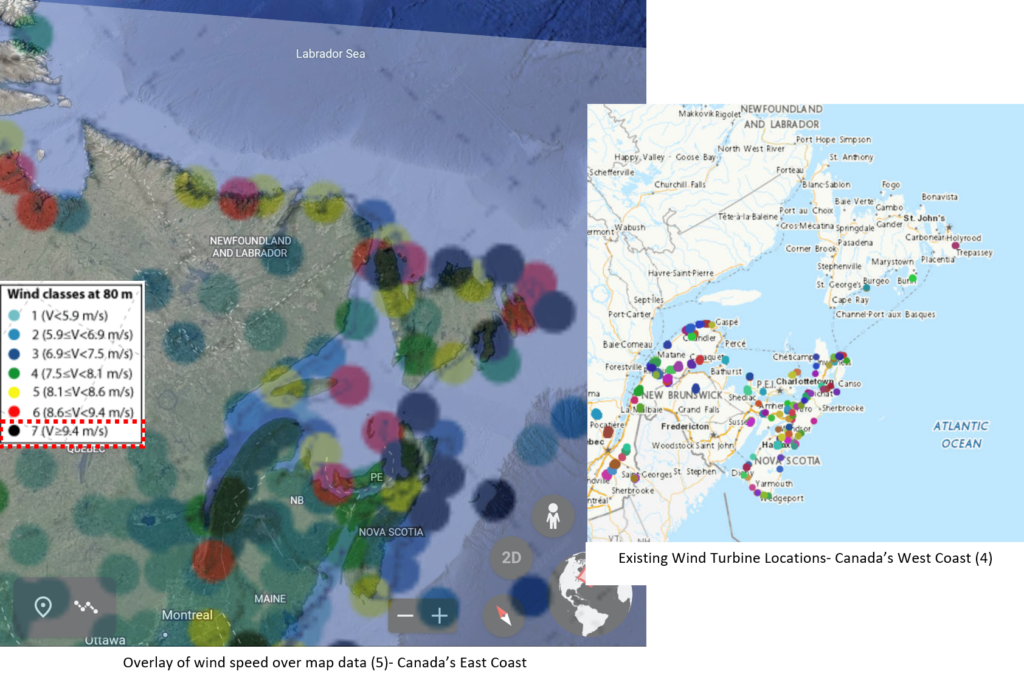
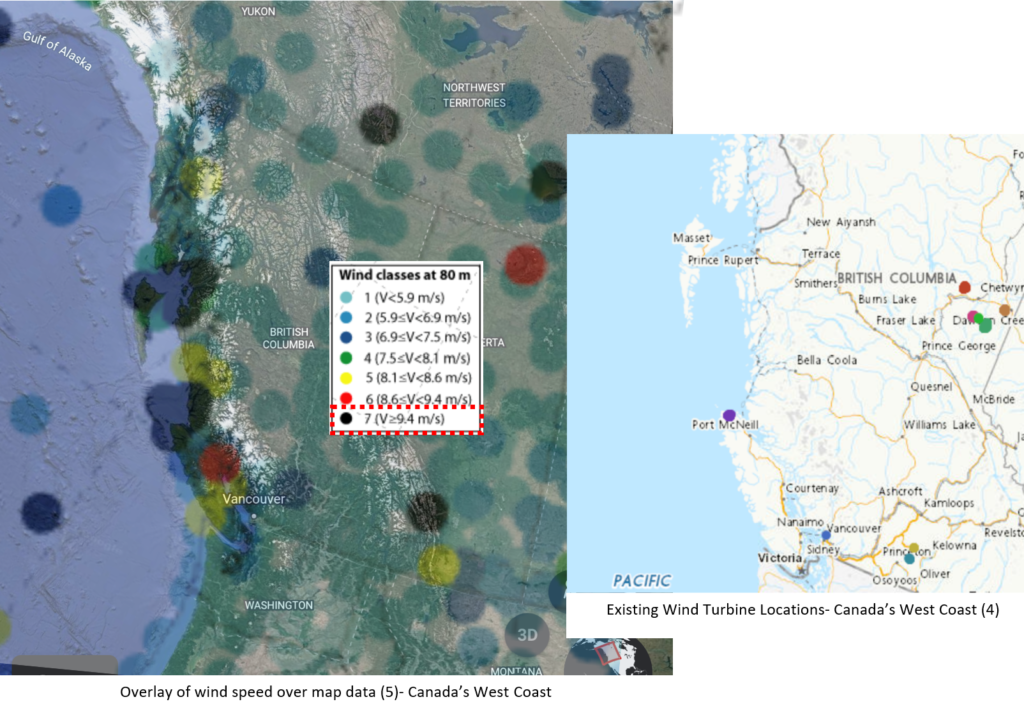
Energy transmittal from wind farms to the mainland is the part to be solved for a Canadian context. Improvements in efficiency and reduction of costs of transmission lines are a step in the right direction. Another interesting approach is using the energy to generate hydrogen, which then can be transported through pipelines or ships.
We have an opportunity to learn from the ongoing activity in the North Sea and see what we can replicate to suit our needs. Canada’s current wind power (14 GW) leaders are Ontario, Quebec, and Alberta (38%, 27%, 15% respectively) generated by onshore wind farms. Adding an offshore mix can create a hub of economic activity drawing in investment, jobs, and decarbonization of old and new industries. The geographical data is available, the technical outlook is constantly improving (following moor’s law), what’s missing are the opportunities.
(1) North Sea development: https://lnkd.in/gjXvxstd
(2) Canada’s geotechnical study for offshore wind: https://lnkd.in/gXTj8xRu
(3) Offshore technology scan report: https://lnkd.in/gyP8GGFD
(4) Wind turbine data base: https://lnkd.in/giKQVDkd
(5) Evaluation of global wind power: https://lnkd.in/gmm2G2Te